


When you live with a serious medical condition, the days can start to blur together. Some mornings feel manageable and end in pain. Other days, just getting dressed feels like an accomplishment. Fatigue, anxiety, brain fog, migraines, back pain, limited mobility — they all become part of daily life.
But when you apply for Social Security Disability benefits, you are suddenly asked to explain all of it clearly and consistently.
That is not easy.
Many people know they cannot work the way they used to. They just struggle to describe exactly why.
A symptom journal for an SSDI claim can help bridge that gap.
Can a Symptom Journal Help an SSDI Claim?
A symptom journal for an SSDI claim can help clarify how often your symptoms occur and how they affect your ability to function. While it does not replace medical evidence or guarantee approval, it can support conversations with your doctor and help ensure your limitations are documented consistently.
Social Security does not approve claims based only on a diagnosis. They look at how your condition limits your ability to work on a regular and sustained basis. A journal can help show those patterns over time.
What Is Social Security Really Looking For?
A lot of people believe disability benefits depend on having the “right” diagnosis listed somewhere. Diagnoses matter, but they are only part of the picture.
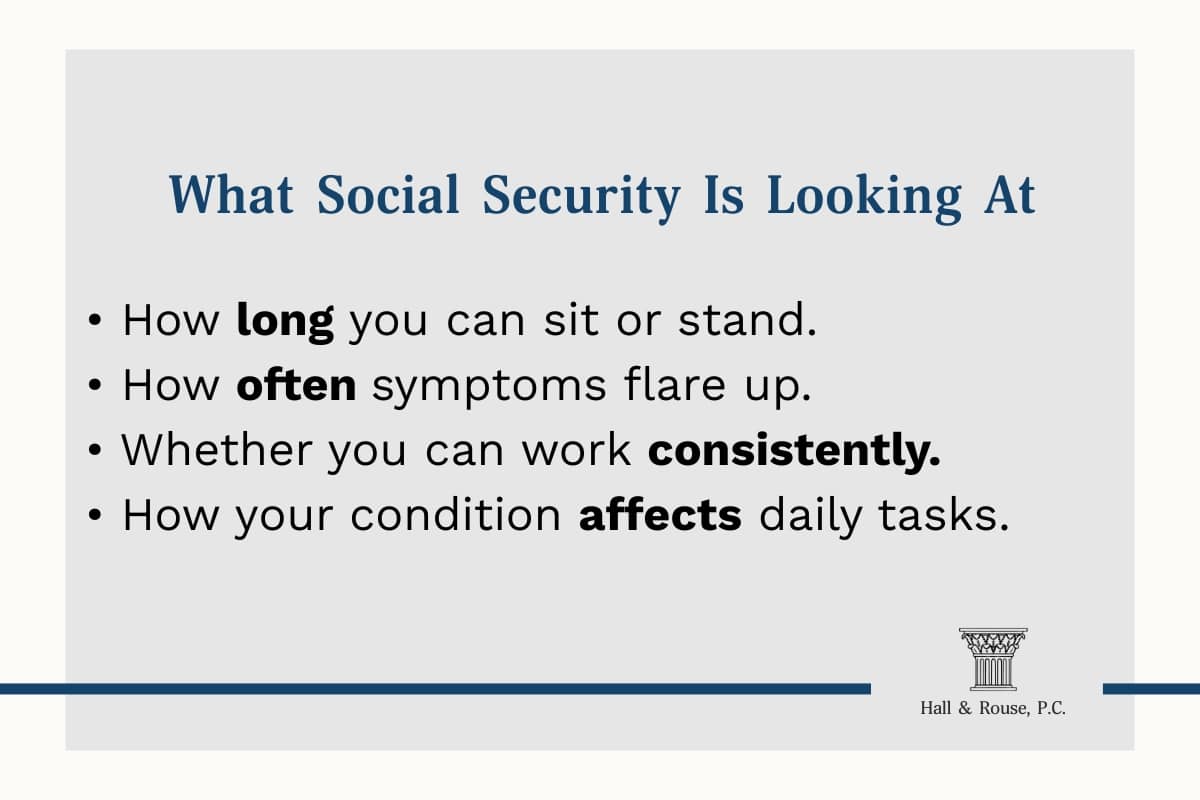
The Social Security Administration evaluates how your condition affects your ability to function in a work setting. That includes questions like:
- Can you sit, stand, or walk for extended periods?
- Can you lift or carry items safely?
- Can you focus, follow instructions, and stay on task?
- Do your symptoms flare up unpredictably?
- Could you realistically maintain full-time work on a consistent basis?
Medical records often focus on test results, medications, and treatment plans. Those are important. But appointments are brief. Symptoms change. What happens between visits does not always make it into your chart.
Think of medical records as snapshots. A symptom journal fills in the space between them.
If you experience chronic pain that forces you to lie down during the day, or migraines that cancel plans twice a week, or anxiety that prevents you from leaving the house consistently, that daily reality matters. A journal helps document it.
Social Security looks for consistency. They want to know whether limitations are ongoing and whether they make regular full-time work unrealistic. A symptom journal can help clarify that picture when it supports proper medical care.
What Is a Symptom Journal for an SSDI Claim — and What Is It Not?
When people hear “symptom journal,” they often imagine something complicated. It is not.
A symptom journal for an SSDI claim is simply a personal record of how your condition affects your daily life.
It is:
- A way to track symptoms over time
- A tool to notice patterns
- A way to communicate more clearly with your doctor or attorney
It is not:
- A replacement for medical treatment
- A guarantee of approval
- A place to exaggerate or guess about medical issues
Social Security compares information across your application, medical records, and testimony. A journal works best when it helps you stay accurate and consistent.
Honesty matters more than perfection.
If fatigue affects you most days but not every single day, write that. If pain builds as the day goes on, write that. If you have better mornings and worse evenings, that detail matters.
Over time, those patterns can help support your overall disability claim.
What Should You Track in a Symptom Journal for an SSDI Claim?
You do not need long entries. Clear and simple notes are usually more helpful.
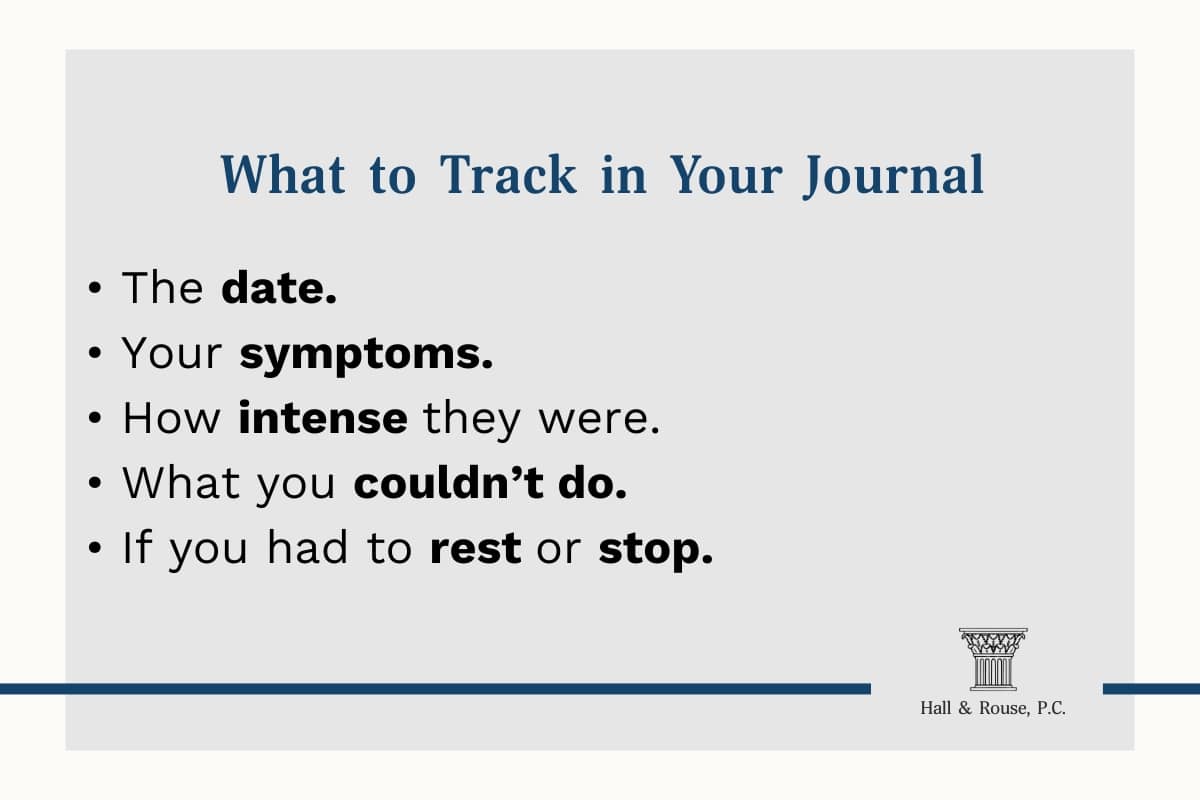
Consider tracking:
- The date
- The symptoms you experienced
- The intensity (mild, moderate, severe)
- How long symptoms lasted
- What activities were limited
- Whether you had to rest, cancel plans, or stop tasks
For example:
“Lower back pain most of the afternoon. Could stand about 10 minutes before needing to sit. Rested twice. Could not finish grocery shopping.”
That type of entry paints a clear picture without sounding medical or technical.
How to Keep a Symptom Journal Without Feeling Overwhelmed
When you are already dealing with health issues, the last thing you need is another burden.
A symptom journal should make things easier, not harder.
You do not need to write daily. You do not need perfect grammar. Even short entries a few times per week can help.
Use whatever format feels manageable:
- A small notebook
- Notes on your phone
- A calendar
- A simple document
Focus on limitations, not details.
Ask yourself:
- Did symptoms stop me from completing something?
- Did I need to rest more than expected?
- Did pain, fatigue, or anxiety limit my functioning?
A short note can say a lot.
If you miss days, do not go back and guess. Just start again.
Consistency over time matters more than perfection.
When Can a Symptom Journal Help During an SSDI Claim?
A symptom journal can be useful at different stages.
Before Applying
It can help you better understand how often symptoms interfere with basic activities. It can also help you communicate more clearly with your doctor, which may lead to more accurate medical records.
During an Appeal
If your claim was denied, a journal may help you identify gaps between what you experience and what appears in your records. Many denials involve insufficient documentation of functional limitations.
Before a Hearing
If you are preparing for a disability hearing, reviewing your journal can help you answer questions clearly about a typical day, your physical limits, or how often symptoms interfere with tasks.
Symptom journals are usually not submitted alone as evidence. Instead, they support medical treatment, help with preparation, and provide clarity about your limitations.
Frequently Asked Questions About Symptom Journals and SSDI
Does Social Security accept symptom journals?
Social Security does not rely on journals alone. However, they can help support your claim when they align with medical evidence and documented treatment.
Can a symptom journal replace medical records?
No. Medical evidence is essential in an SSDI claim. A journal can help clarify limitations, but it does not replace professional medical documentation.
How often should I track symptoms?
There is no strict rule. Even short, honest entries several times per week can help show patterns over time.
Should I submit my journal directly to Social Security?
It is often best to discuss this with your attorney before submitting additional materials. A lawyer can help determine whether it supports your claim effectively.
What This Means for You
Living with a disabling condition is already exhausting. Explaining it repeatedly can feel even harder.
A symptom journal for an SSDI claim will not change your diagnosis. It will not guarantee approval. But it can help you explain your daily reality more clearly, support your medical records, and identify patterns that matter.
Small, honest notes over time can make a difference.
If you are applying for Social Security Disability benefits, appealing a denial, or preparing for a hearing in North Carolina, you do not have to figure it out alone.
At Hall & Rouse, P.C., we help people understand what the Social Security Administration is really looking for and how to present their case clearly and accurately.
Contact Hall & Rouse, P.C. for a free consultation to discuss your SSDI claim and your next steps.